


Why Your Next AC Will Cost More Than Your Car (2026)
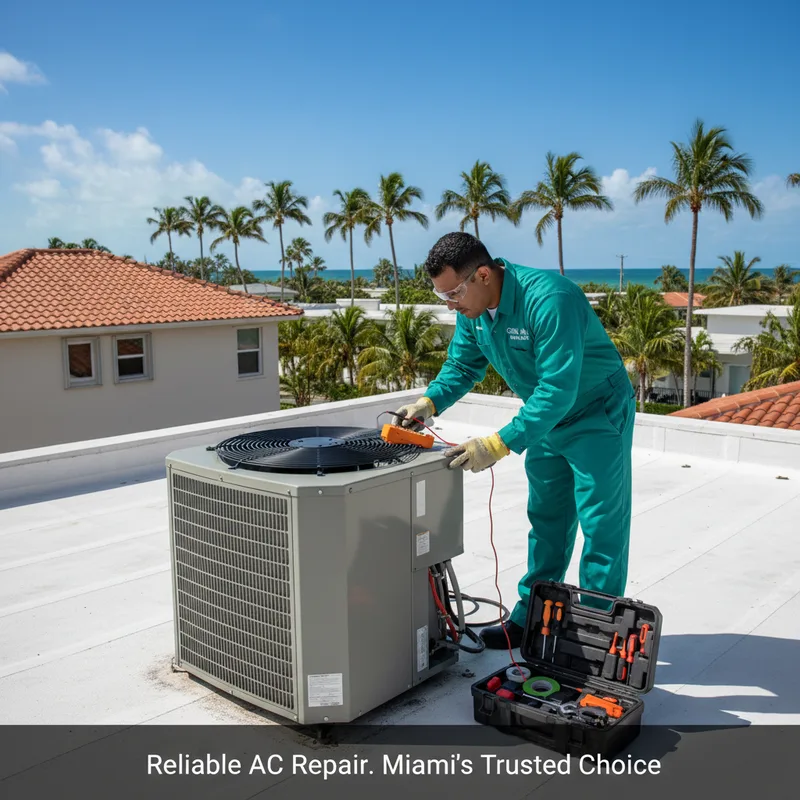
A homeowner in Pembroke Pines called us last week. Her 12-year-old AC compressor had failed. She expected to pay around $7,000 for a new system — what her neighbor had paid two years ago for the same thing. The actual quote: $14,800. She thought it was a mistake.
It was not a mistake. A standard residential AC replacement in South Florida now averages $10,000 to $12,000, and high-efficiency systems are running up to $30,000. That is more than many used cars on the road today. Industry analysts are projecting another $1,000 to $1,200 per system increase before the end of 2026.
Based on our experience as a licensed HVAC contractor (CAC1817115) serving Miami-Dade and Broward County, we have watched these costs compound over the last five years. This was not an overnight price explosion. It was a slow, steady climb that accelerated sharply in 2024 and 2025 as tariffs, refrigerant mandates, and manufacturer hikes all converged at the same time. We are sharing this because our customers deserve to understand exactly why their quote is higher than they expected — and what they can do about it.
Here is the simplest way to understand what happened: everything tripled. When a full AC replacement cost $6,000 to $7,000, the metals cost less, the refrigerant cost less, the equipment cost less, and the labor cost less. Then every single input tripled. Copper tripled. Refrigerant tripled. Insurance tripled. Manufacturer wholesale prices went up 15-30%. When everything that goes into an AC system triples, a $7,000 job becomes a $17,000 job. That is the math. And we are going to break down every piece of it.
⚠ What Happens When You Skip AC Maintenance
Based on service patterns we see daily across Miami-Dade and Broward County homes.
The Trade War Nobody Told You About
Your air conditioner is made of metal. Copper runs through the line sets, the evaporator coils, and every inch of electrical wiring. Aluminum forms the condenser fins and heat exchangers. Steel makes up the compressor housing and the cabinet. Without these three metals, there is no AC unit.
Metal tariffs started years ago at 25% — and we felt those price increases immediately. But in March 2025, the federal government doubled Section 232 tariffs on all three. Aluminum, copper, and steel imports now carry 50% duties. That was the moment prices went from “gradually increasing” to “sticker shock.” But it was just the beginning.
On top of the 50% metal tariffs, a 10% baseline tariff on all imports went into effect. Some countries got hit even harder: 145% on Chinese imports and 25% on Mexican imports. Many HVAC components — circuit boards, motors, fans, thermostatic expansion valves — come from these countries. The tariffs rippled through every step of the manufacturing process.
Here is the part that surprised even people inside the industry: American-assembled AC units got hit too. Brands like Goodman, which assembles units in Houston, and Carrier, which has plants in Indianapolis, still depend on imported raw materials. The copper in their coils was mined overseas. The steel in their compressor housings was imported. The 50% tariff hit those materials before they ever reached an American factory floor.
Then in August 2025, a dedicated 50% tariff on copper went into effect. Copper is the single most critical metal in HVAC manufacturing — it is in the line sets, the evaporator coils, the condenser coils, and every electrical connection. Copper prices were already near world-high levels before the tariff. After it, the cost increases became impossible for manufacturers to absorb.
The math is brutal: Industry estimates put tariff-driven cost increases at 10-35% on HVAC manufacturing alone. On a $10,000 AC system, that is $1,000 to $3,500 in tariff costs passed directly to the homeowner. There is no manufacturer in the world absorbing these costs — they are all passing them through.
The Great Refrigerant Switchover
While tariffs were hitting the metals, the federal government dropped a second bomb on the HVAC industry: the refrigerant ban.
Under the EPA’s AIM Act, manufacturers were prohibited from producing new R-410A equipment after January 1, 2025. R-410A is the refrigerant that has powered virtually every residential AC system built in the last 15 years. As of January 1, 2026, all new split AC systems must use a refrigerant with a Global Warming Potential (GWP) below 700. That means R-454B.
R-454B is not just a different chemical in the same bottle. It is classified as A2L — mildly flammable. That classification changes everything about how an AC system is designed, built, and installed:
- Completely redesigned components — every AC unit using R-454B needs new compressors, new coils, new valves, and new safety systems that were never needed with R-410A
- Built-in leak detection systems — because the refrigerant is flammable, units must include sensors that detect leaks and trigger safety shutdowns
- New safety certifications — every component must pass updated UL safety testing, which adds months of development time and significant engineering costs
- Specialized installation procedures — hiring an unlicensed installer for an R-454B system is not just illegal — it is genuinely dangerous. Improper brazing of refrigerant lines with a flammable refrigerant can cause fires or explosions
The price impact is significant. R-454B equipment costs 8-10% more than the R-410A systems it replaces, with some estimates running as high as 20% more. And the refrigerant itself has exploded in price: R-454B cylinders that cost $345 in 2021 now cost over $2,000 — a 300% increase in four years.
Meanwhile, R-410A is not dead — it is just becoming scarce and expensive. If you already have an R-410A system, you can still service it. But wholesale R-410A prices have climbed from $8-$12 per pound to $25-$45 per pound. And here is the critical detail: systems designed for R-410A cannot be converted to R-454B. They are fundamentally different systems. When your R-410A unit reaches end of life, you are buying an entirely new R-454B system at 2026 prices. There is no retrofit, no workaround, no conversion kit. Learn more about what this means for your AC repair costs in Miami.
Every Major Brand Raised Prices — And Then Raised Them Again
Tariffs and refrigerant mandates gave manufacturers the raw material cost increases. What happened next was an industry-wide price escalation that hit homeowners from every direction:
| Manufacturer | 2025 Price Increase | 2026 Additional Increase |
|---|---|---|
| Carrier | 16% residential, 20% commercial (March 2025) | Mid-single-digit increase planned |
| Trane | 20% residential (February 2025) | Up to 5% more (January 2026) |
| Daikin/Goodman | 18-20% all lines (April 2025), plus additional 17% | Ongoing adjustments |
| Lennox | 20%+ on A2L systems, plus 10% on R-454B | Up to 10% more (February 2026) |
Read those numbers carefully. These are not retail markups by local contractors. These are wholesale price increases from the factories. When Trane raises wholesale prices 20%, the contractor who buys that unit pays 20% more. When the contractor installs it in your home, you pay 20% more. There is no middleman absorbing the difference.
The overall picture: 15-30% wholesale price increases across all major brands in 2025, followed by additional increases rolling through the first half of 2026. A system that wholesaled for $4,000 in early 2024 now wholesales for $5,500 to $6,000 — before the contractor adds labor, permits, materials, and the copper line set that just got hit with a 50% tariff.
The Price-Fixing Lawsuit
It gets worse. A lawsuit has been filed alleging that major HVAC manufacturers coordinated their price increases. The timing is suspicious — multiple competing brands all announcing 15-20% increases within weeks of each other. Whether the courts find evidence of coordination remains to be seen. But the prices themselves are already baked into every AC unit sitting in a warehouse or being installed in a South Florida home right now.
The Technician Shortage Is Real
Even if tariffs disappeared tomorrow and refrigerant costs dropped, AC replacement would still be more expensive than it was two years ago. The reason: there are not enough people to install the systems.
The numbers are stark. For every 5 skilled tradespeople who retire, only 1 new worker enters the field. That ratio has been getting worse every year, and the R-454B transition made it worse faster. Technicians who can safely handle a mildly flammable refrigerant, operate leak detection systems, and follow the new installation protocols command higher wages — because there simply are not enough of them.
Installation itself has become more complex. An R-454B system installation requires more steps, more safety checks, more specialized tools, and more time than an R-410A install from five years ago. A job that took a two-man crew six hours in 2023 now takes eight or nine hours with additional safety verification. More hours means more labor cost per installation.
This is also why the gap between a licensed HVAC contractor and an unlicensed handyman matters more than ever. The licensed technician’s higher rate reflects real training, real certifications, and the ability to handle a flammable refrigerant without putting your family at risk. The handyman’s cheaper rate reflects the fact that he cannot legally or safely install the equipment you need.
The Costs You Do Not See: What HVAC Companies Pay Just to Operate
We want to be transparent about something most HVAC companies will never tell you: it costs more to run a legitimate HVAC business in 2026 than at any point in the industry’s history. And every one of those costs factors into the price of your installation.
As a licensed contractor, here is what we deal with before we even pull up to your property:
- Business insurance — liability and workers’ comp insurance for HVAC companies has increased significantly over the past five years. Insuring technicians who handle flammable R-454B refrigerant costs more than insuring technicians who worked with non-flammable R-410A
- Licensing fees — state licensing fees and continuing education requirements have gone up. Maintaining a valid CAC license in Florida is not cheap, and it requires ongoing investment in training
- Equipment and tools — the gauges, leak detectors, recovery machines, and safety equipment needed for R-454B systems cost more than their R-410A predecessors
- The AC units themselves — when we buy a Carrier, Trane, or Goodman unit from our distributor, we are paying 15-30% more than we paid two years ago, wholesale
- Copper line sets and materials — every installation requires copper line sets, which are directly affected by the 50% copper tariff. Fittings, brazing materials, electrical wire — all copper-based, all more expensive
- Refrigerant costs — R-410A has gone from $8-$12 per pound to $25-$45 per pound for servicing existing systems. R-454B is even more expensive per cylinder
- Vehicle fuel, parts, and fleet maintenance — the trucks that bring technicians and equipment to your home cost more to operate
None of these costs exist in isolation. They compound on top of each other. The manufacturer raises the unit price 20%. The copper tariff adds another 10-15% to the line set and coil costs. Insurance adds to overhead. Higher technician wages add to labor. Refrigerant costs add to the fill charge. By the time every cost increase layers on top of the last one, a $7,000 job from 2022 is genuinely a $14,000 to $17,000 job in 2026. There is no fat to trim — every dollar reflects a real cost that a legitimate, licensed contractor cannot avoid.
What This Means for the AC System You Already Own
Here is the part of this article that could save you five figures. And it comes directly from what we see every day on service calls across Miami-Dade and Broward.
That AC unit sitting outside your house right now — the one you probably have not thought much about — is worth more today than it has ever been worth. Not because it has appreciated. Because replacing it has become enormously expensive. Every year you keep that system running efficiently is a year you do not write a $12,000 to $17,000 check.
The math is simple and devastating. Real AC maintenance costs roughly $500 per year. Over a 15-year system lifespan, that is $7,500 total in maintenance. The alternative — skipping maintenance and replacing the system when it fails prematurely at year 8 or 10 — costs $12,000 or more for the replacement alone. That does not include the higher FPL bills from running a degraded system, the emergency AC repair costs along the way, or the potential mold damage from a neglected unit in Miami’s humidity.
| Scenario | 15-Year Cost |
|---|---|
| Annual maintenance ($500/yr) — system lasts full 15-20 years | $7,500 |
| No maintenance — system fails at year 8, replace at 2026 prices | $12,000 – $17,000+ |
| Cheap $29 maintenance — zero protection, same as no maintenance | $12,000 – $17,000+ |
This is not a sales pitch. It is arithmetic. And in 2026, with every force in the market pushing replacement costs higher, that arithmetic has never been more one-sided.
What Real $500/Year Maintenance Actually Covers
When we say maintenance, we do not mean a guy showing up, looking at your unit, and leaving. A real AC tune-up is a comprehensive technical service that takes 60 to 90 minutes and includes:
- Electrical component testing and replacement — contactors and capacitors cycle roughly 1,000 times per year. Degraded parts deliver low voltage to the compressor, forcing it to draw 25% more amps. That is a 25% higher FPL bill and compressor strain that leads to burnout
- Evaporator and condenser coil cleaning — dirty coils change pressure readings, making freon adjustments inaccurate. Coil cleaning must happen before any refrigerant work
- Freon level balancing — too much freon stresses the compressor. Too little overheats it, cooks the internal oil, and burns the windings. Either extreme kills your most expensive component
- Superheat readings — confirms all refrigerant entering the compressor is fully vaporized. This measurement requires real gauges and real training — it is the single best indicator of system health
- Drain line cleaning — in Miami’s 70-90% humidity, clogged drain lines cause water damage and mold growth inside the air handler and ductwork
- Full performance evaluation — temperature split measurement, amp draw testing, and verification against manufacturer specifications
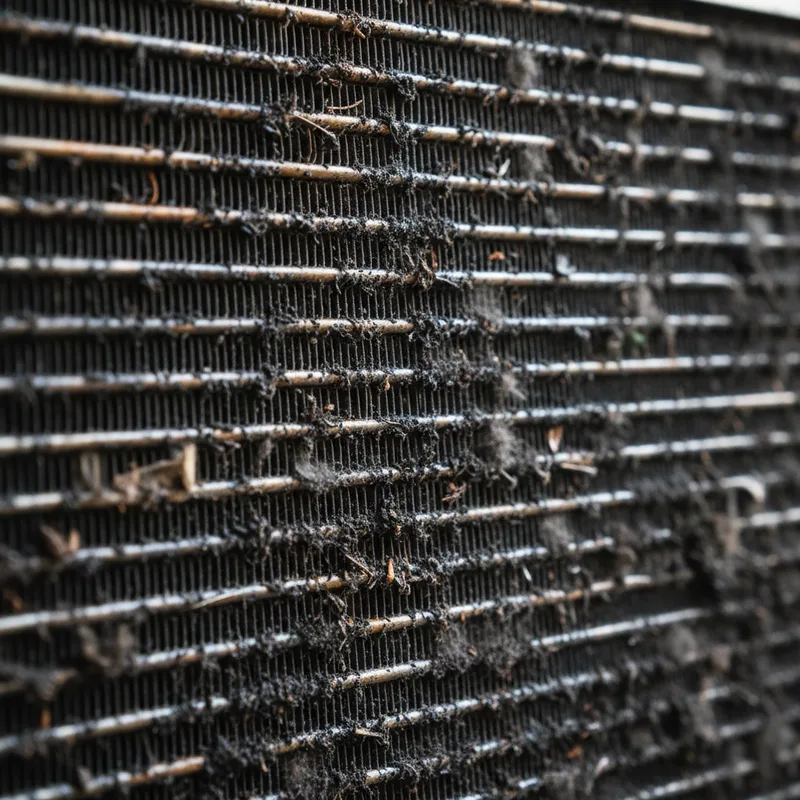
This is what the inside of a neglected AC looks like. Mold, dust, and debris coating the evaporator coil — from an actual Miami-Dade service call.
Every step depends on the one before it. Skip coil cleaning and the freon readings are wrong. Skip electrical testing and the compressor burns out from low voltage. Skip superheat readings and liquid refrigerant floods the compressor. This is why a legitimate tune-up costs what it costs — and why a $29 visit provides exactly zero protection.
$500/Year Beats $17,000 — Book Now
Comprehensive AC maintenance by licensed technicians. Freon balancing, coil cleaning, electrical testing, superheat readings.
The Bottom Line: These Prices Are Not Coming Back Down
If you are waiting for AC prices to drop, stop waiting. The tariffs are in effect with no rollback announced. The R-454B transition is permanent — R-410A equipment is never coming back. Manufacturer price increases continue rolling out through 2026. The labor shortage is getting worse, not better. Every indicator points to prices continuing to climb.
That means the AC system you have right now is the most valuable piece of equipment in your home. Treat it that way. Get it maintained by a licensed contractor who carries a CAC license number and knows how to do the work properly. Avoid the common AC maintenance mistakes that shorten your system’s life. Understand what real AC maintenance actually involves. Consider an AC service contract that locks in today’s maintenance rates before they climb further. Spend the $500 per year it costs to keep your system running efficiently. And do not wait until it fails on a 95-degree August afternoon to discover what replacement costs in 2026.
Because by then, that number will be even higher.
Frequently Asked Questions About AC Replacement Costs in 2026
Products and Services That Protect Your Investment
AC Maintenance Plan
Comprehensive annual service with freon balancing, coil cleaning, electrical testing, and priority scheduling. The $500/year investment that prevents five-figure replacements.
Learn More →AC Installation
Licensed AC replacement with proper permits, R-454B certified installation, and manufacturer warranty protection. Done right with the new refrigerant.
Learn More →AC Tune-Up
31-point inspection with freon check, electrical testing, superheat readings, and full performance evaluation. Catch problems before they become emergencies.
Learn More →