
Why AC Maintenance Is More Important Than Ever in 2026
AC replacement in Miami now costs $16,000–$17,000. That’s not a typo. Prices have skyrocketed due to new freon regulations, rising material costs, and labor increases across South Florida. The good news? A $300/year maintenance plan can prevent the catastrophic failures that force a full replacement. Here’s what every Miami homeowner needs to know.
We’re seeing it every week in Miami, Fort Lauderdale, and Hollywood: homeowners who skipped their annual tune-up are now facing five-figure bills they never saw coming. Some are taking out loans. Others are choosing to live without air conditioning entirely because they simply cannot afford to replace the system. None of this is necessary if you understand what maintenance actually does and why skipping it is the most expensive decision you can make.
The Shocking Cost of AC Replacement in 2026
If your AC system dies in 2026, here’s what you’re looking at for a full replacement in South Florida:
| System Size | Standard (14-16 SEER) | High Efficiency (18+ SEER) |
|---|---|---|
| 2 Ton (small condo) | $10,000 – $12,000 | $14,000 – $16,000 |
| 3 Ton (avg. home) | $13,000 – $15,000 | $17,000 – $20,000 |
| 4 Ton (larger home) | $15,000 – $17,000 | $19,000 – $23,000 |
| 5 Ton (large home) | $17,000 – $20,000 | $22,000 – $26,000 |
The average Miami home runs a 3-5 ton system. That puts the typical AC installation between $16,000 and $17,000 for a standard efficiency unit. High-efficiency systems push well past $20,000.
Why Did Prices Jump So Much?
Several factors are driving these increases at the same time:
- Copper and aluminum costs — the raw materials in every AC unit have surged in price globally. Condensers, evaporator coils, and line sets all use significant amounts of copper and aluminum.
- Gold used in electrical components — modern AC systems use gold in circuit boards and electrical contacts for conductivity and corrosion resistance. Gold prices have hit record highs.
- New R-454B freon — the phase-down of R-410A means new systems use R-454B refrigerant, which is significantly more expensive to manufacture, handle, and charge.
- Labor cost increases — cost of living in Miami has risen sharply. Licensed HVAC technicians command higher wages, and that gets passed directly to the customer.
- Supply chain pressures — manufacturers are still dealing with production constraints that have kept equipment prices elevated since 2023.
The result? Many homeowners across Pembroke Pines, Hallandale Beach, and greater Miami-Dade are now financing their AC replacements with loans. Some families in older buildings in Hollywood and Fort Lauderdale are choosing to live without AC because they cannot afford a new system. In South Florida, where summer temperatures regularly hit 95 degrees with 80% humidity, that is genuinely dangerous.

Protect Your AC Before Summer Hits
$99 tune-up with 31-point inspection. Licensed #CAC1817115. BBB A+ Rated.
Book AC Tune-Up →Why $300/Year Maintenance Beats a $16,000 Replacement
The math is straightforward and impossible to argue with:
$300/year × 10 years = $3,000 total in maintenance costs. That is less than one-fifth of a single AC replacement. A well-maintained system in Miami should last 12-18 years. A neglected system? You’re lucky to get 8.
But the real value of AC maintenance is not just extending lifespan. It’s preventing the specific failures that turn a $300 tune-up into a $16,000 emergency.
What Happens When You Skip Maintenance
Here’s the chain of events we see every single summer in Miami homes:
- Dirty filters and coils restrict airflow. When air can’t flow properly through the system, the compressor has to work significantly harder to push refrigerant and cool your home. This is like running a car engine with a clogged air filter — it strains everything downstream.
- Low freon causes the compressor to overheat. Refrigerant leaks are common in Miami because of the humidity and salt air corroding copper lines. When freon drops below optimal levels, the compressor overheats trying to compensate. This is the number one compressor killer.
- The compressor is the heart of your AC. When the compressor fails, the entire system usually needs replacement. A compressor alone costs $2,500-$4,000, but on an older system, replacing just the compressor rarely makes financial sense. You end up replacing everything.
- Dirty evaporator and condenser coils reduce efficiency by 30-40%. Your system runs longer cycles, drives up your electric bill, and puts constant stress on every component. We regularly see FPL bills drop $50-$80/month after a thorough AC tune-up and coil cleaning.
- Clogged drain lines cause water damage AND mold. In Miami’s humidity, condensate drain lines clog constantly. When they back up, water overflows into your ceiling, walls, and air handler. That creates mold problems that cost thousands to remediate — on top of the AC repair itself.
A $300 annual AC maintenance visit catches every single one of these problems before they become catastrophic. That is not an expense. It is insurance against a $16,000 surprise.
What Proper AC Maintenance Includes
Not all maintenance is equal. A legitimate AC tune-up from a licensed HVAC company should include all of the following:
- 31-point system inspection — comprehensive check of every component, electrical connection, and safety control in your system
- Freon level check and top-off — measuring refrigerant pressure and adding freon if levels are low. This single step prevents more compressor failures than anything else.
- Evaporator coil cleaning — the indoor coil that absorbs heat from your home. When it gets coated in dust, pet hair, and mold, cooling capacity drops dramatically.
- Condenser coil cleaning — the outdoor coil that releases heat. Clogged with leaves, dirt, and debris, it forces your system to work overtime.
- Drain line flush with anti-mold treatment — clearing the condensate line and treating it to prevent biological growth. This prevents water damage and mold issues.
- Electrical component testing — checking capacitors, contactors, relays, and wiring connections. Weak capacitors are the second most common cause of system failures.
- Thermostat calibration — ensuring your thermostat reads accurately and communicates properly with the system
- Blower motor check and calibration — testing motor amperage, lubrication, and airflow output. A failing blower motor wastes energy and strains the compressor.
- Filter replacement — installing a clean, properly sized filter for optimal airflow
For homeowners who want to go further, our complete HVAC system cleaning includes deep cleaning of the entire air handler, ductwork, and all components — a full reset for your AC system.
★ 4.9 Stars — 287 Google Reviews
Licensed #CAC1817115 • BBB A+ Rated • 1,000+ Homes Served
The Hidden Damage Homeowners Don’t See
One of the most frustrating things we deal with as HVAC contractors is seeing systems that could have been saved. The damage happens silently, inside components you never look at, in places you cannot reach without professional tools.
Miami’s combination of heat, humidity, and salt air creates the worst possible environment for HVAC equipment. Here’s what’s happening inside your AC system right now if it hasn’t been serviced:
- Mold and moisture are corroding internal components. The inside of your air handler stays dark and damp — the perfect environment for mold colonies. Mold doesn’t just affect air quality. It physically damages metal surfaces, insulation, and electrical components over time.
- Fan motors rust from the inside out. Bearings corrode, windings deteriorate, and one day the motor simply seizes. A fan motor replacement runs $400-$800 — but it also means your compressor was running without proper airflow until it failed.
- Blower motors fail from accumulated dirt and strain. Every month of running with a dirty filter and dirty coils adds incremental wear to the blower motor. It draws more amps, runs hotter, and eventually burns out.
- Coils get so encrusted they can’t be cleaned. We have seen evaporator coils so caked with biological growth and debris that chemical cleaning cannot restore them. At that point, the coil must be replaced — a $1,500-$3,000 job that maintenance would have prevented entirely.
By the time you notice symptoms — reduced cooling, strange noises, higher bills, water leaks — the damage is already expensive. The system has been struggling for months or years before it finally gives up.
In Fort Lauderdale and Hollywood, we are seeing this constantly in older buildings. Systems installed 10-12 years ago that have never been maintained are failing in clusters. The owners face $16,000+ replacement bills, and in many cases, the damage started years ago with a $300 problem that nobody caught.
We have seen systems that could have been saved with a $300 tune-up, but the owner waited until it was a $16,000 problem. That is not an exaggeration. It happens every week.
When to Know It’s Time to Replace vs. Repair
Maintenance prevents most catastrophic failures, but every system eventually reaches the end of its useful life. Here are the signs that repair no longer makes sense and replacement is the smarter investment:
- Your system is 15+ years old. Most AC systems in South Florida have a realistic lifespan of 12-18 years with proper maintenance. Past 15, you are living on borrowed time and spending more to keep it running.
- It uses R-22 freon (Freon). R-22 was fully phased out by the EPA. If your system still uses it, a single recharge can cost $800-$2,000 because the refrigerant is incredibly scarce. At that price point, replacement pays for itself quickly.
- Repair costs exceed 50% of a new system. If a single repair costs $7,000-$8,000 on a 12-year-old system, you are throwing money at a machine that will need another expensive repair within a year or two.
- You are calling for service 3+ times per year. Frequent breakdowns signal systemic failure, not isolated problems. Each AC repair call costs $150-$500, and they add up fast while never solving the underlying issue.
- Energy bills keep climbing despite repairs. If your FPL bill is $50-$100 higher per month than it should be, you are paying $600-$1,200/year in wasted electricity. A new high-efficiency system pays back that difference over time.
When it is time to replace, we handle the full AC installation process including permitting, equipment selection, and proper sizing for your home. An improperly sized system is almost as bad as a neglected one.
What Miami Homeowners Should Do RIGHT NOW
If you have read this far, you understand why maintenance matters. Here is exactly what to do:
- Schedule a tune-up BEFORE summer. April and May are ideal. Every HVAC company in Miami, Pembroke Pines, and Broward County is slammed from June through September. If you book now, you get priority scheduling and normal rates.
- Ask about annual maintenance plans. A maintenance agreement locks in your price, gives you priority service when you need it, and includes the inspections that prevent compressor failure.
- Get your freon levels checked. Low freon is the number one compressor killer. If your system is low, you have a leak that needs to be found and repaired. A freon check and top-off during a tune-up costs a fraction of what a new compressor costs.
- Do NOT wait until your AC breaks down in July. When your AC dies in the middle of a Miami summer, wait times are 3-5 days because every technician in the county is running emergency calls. Emergency rates are 50-100% higher than standard service. And you are sitting in a 90-degree house while you wait.
Beat the summer rush. Book your $99 tune-up today. It is the cheapest insurance policy you will ever buy.
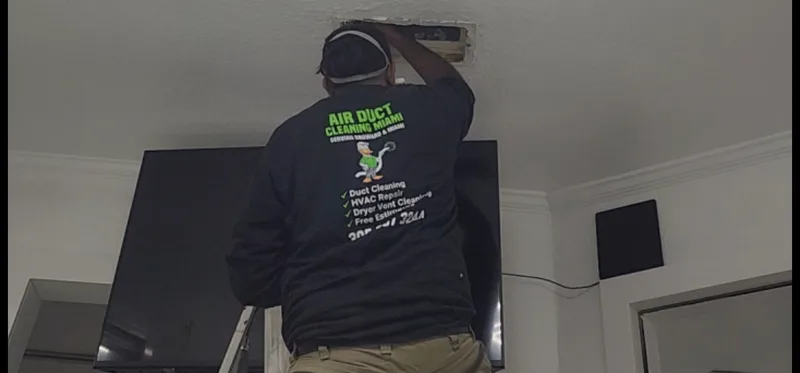
Book Your AC Tune-Up Today
$99 tune-up with 31-point inspection. Freon check included. Same-day service available.
Book AC Maintenance →